

“The Skies of the World” collection, F/W 1979-80
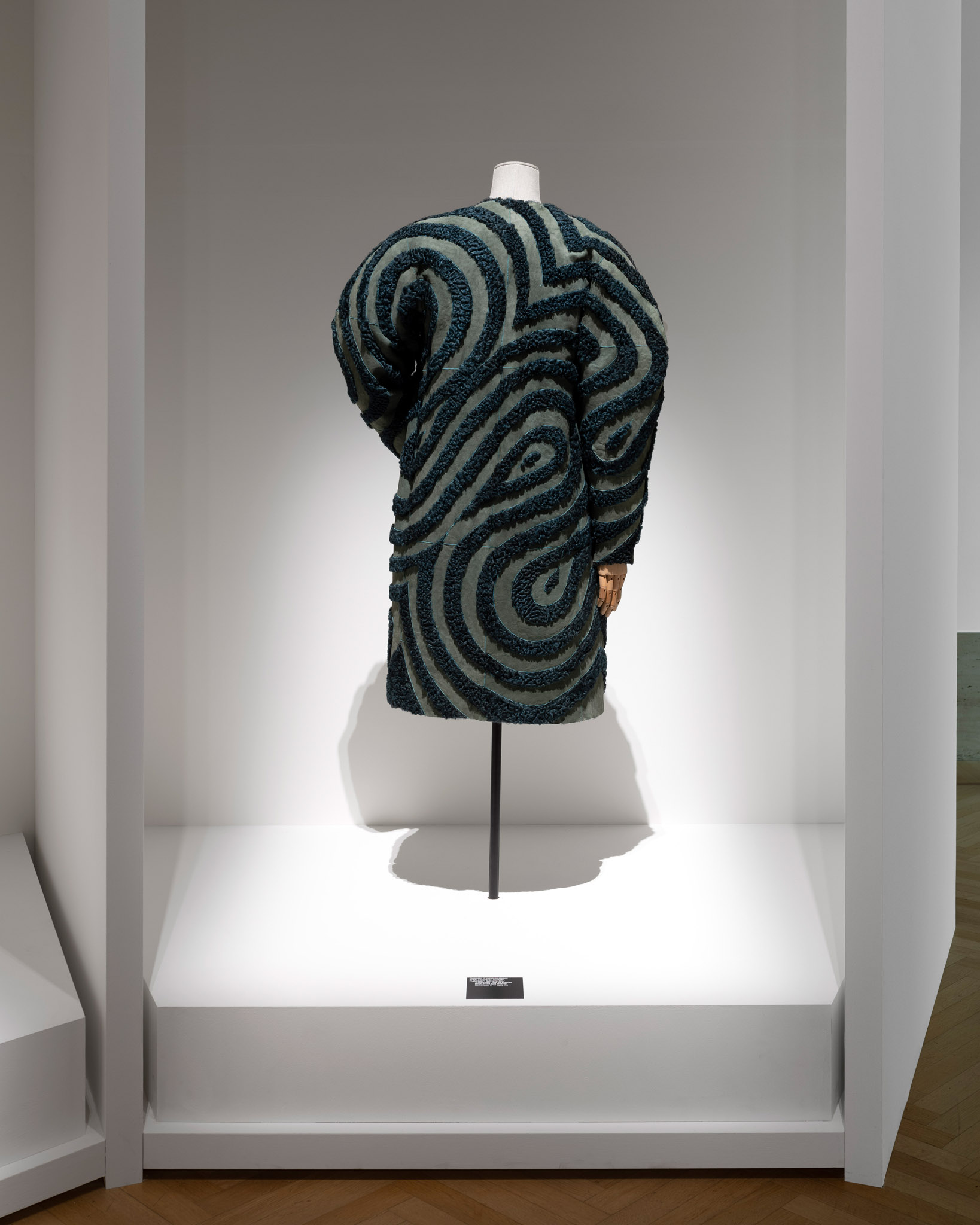
Reversible hip-length coat in blue-green Persian lamb. The generous, sculpted silhouette fastens at the front with a tie that draws the overlapping fronts together beneath wide lapels. The sleeves are rounded at the shoulder to follow the “Labyrinth” motif that structures and defines the garment. Created using the intarsia technique, the pattern is achieved by cutting and reassembling the pelts, alternating the leather and fur sides. The same process also produces a second version with the motif reversed. The design is inspired by the hedge maze at Hampton Court Palace, created in 1690 in honor of William III of Orange
“The Skies of the World” collection, F/W 1979-80
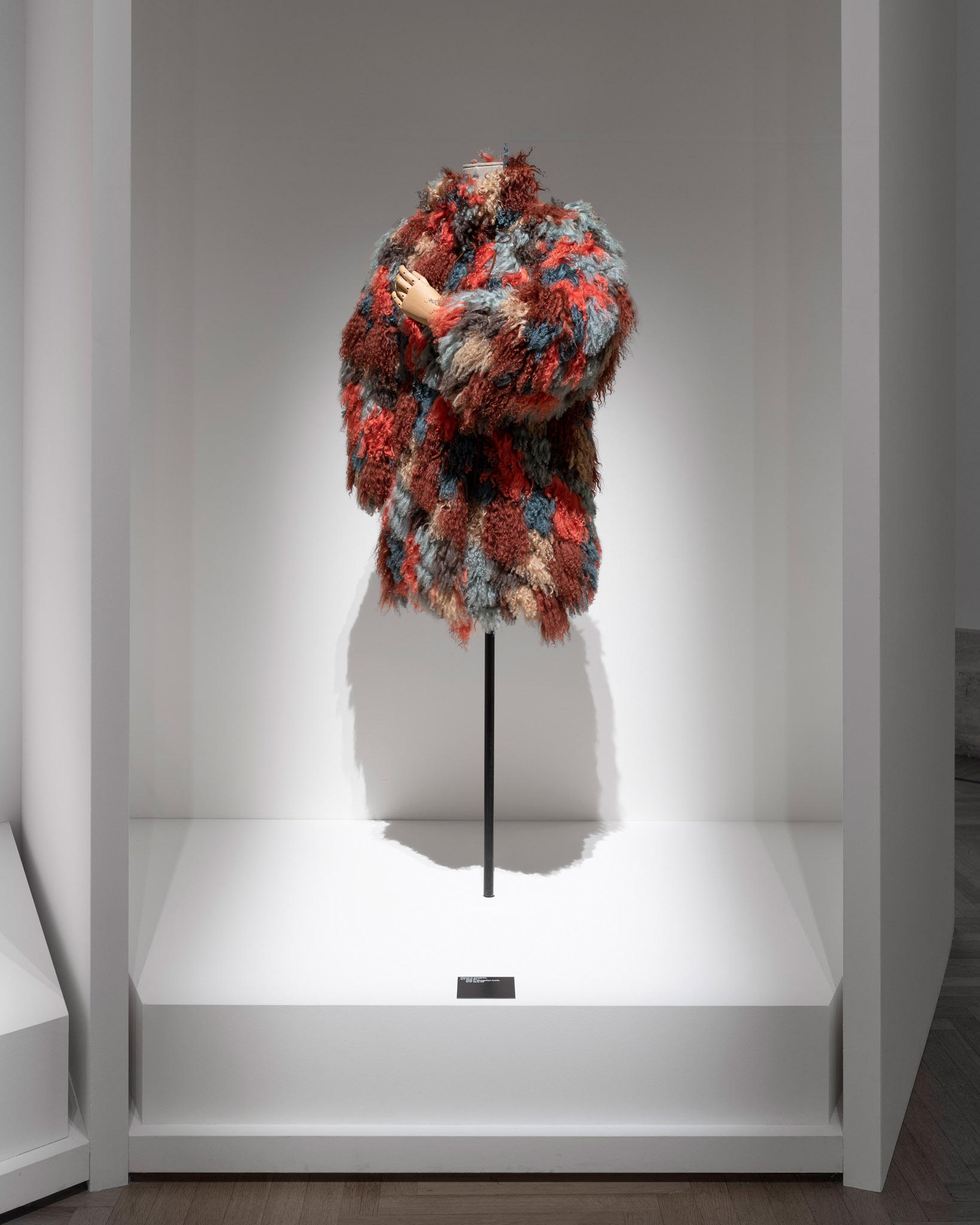
Short jacket in Mongolian lamb featuring a polychromatic palette inspired by the colors and atmospheric conditions of skies around the world. The collection's press release includes names such as Fog in Milan, Haze in London, Night in Tokyo, Noon in Saint-Germain, and Twilight in Venice. Slightly flared in silhouette, the jacket fastens with a row of leather ties. It features a shawl collar and long, full sleeves. The dynamic pattern of alternating colors is created by stitching together strips of fur dyed in different shades
“The Skies of the World” collection, F/W 1979-80
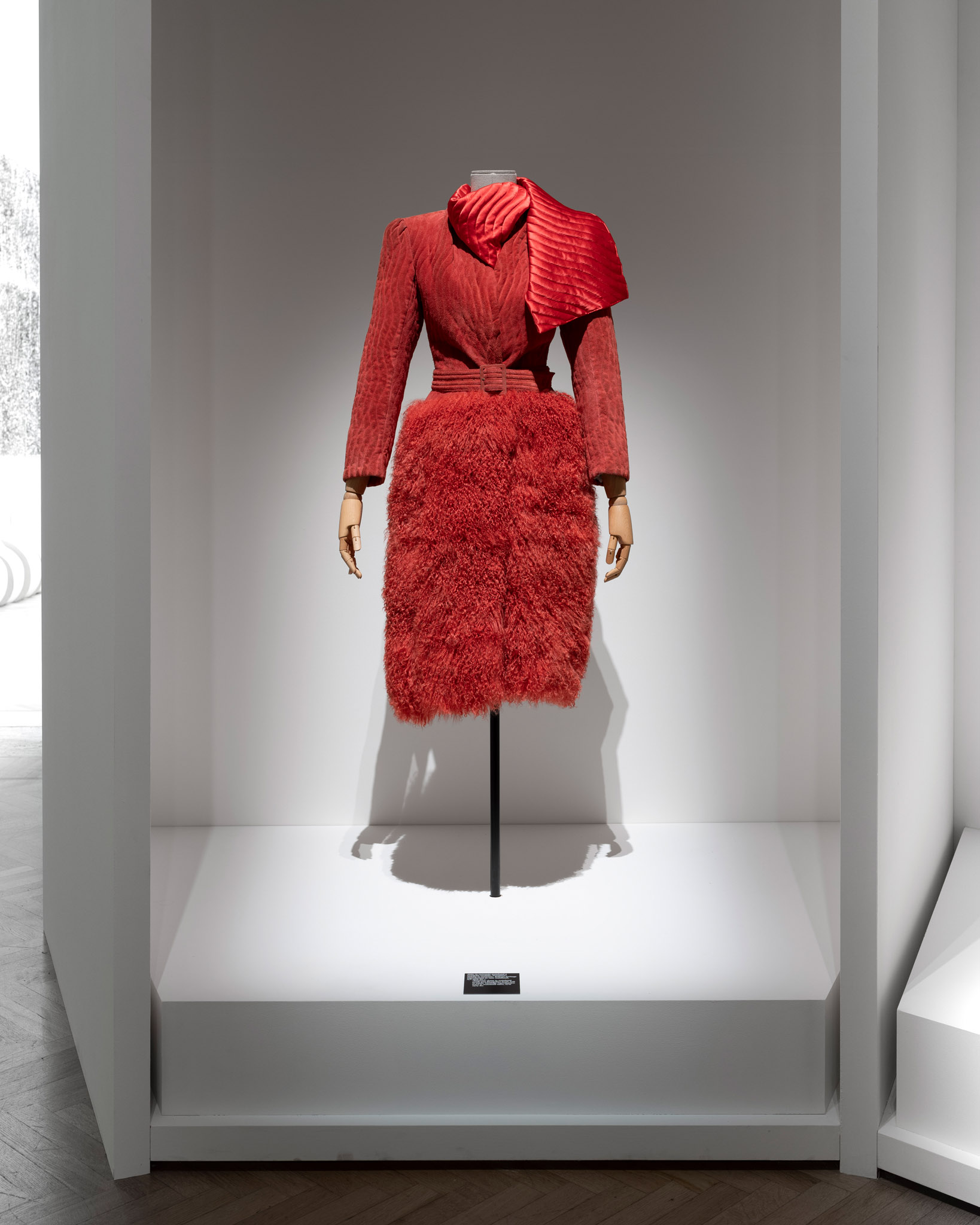
Knee-length dress with a fitted bodice in matelassé suede in the “Waves” pattern of undulating vertical lines. The raised collar, with sculptural pleats, is designed to secure a quilted satin scarf featuring the same motif as the bodice. The narrow waist is defined by a matching suede belt, while the voluminous Mongolian lamb skirt accentuates the dress’s hourglass silhouette. The garment and its accessories are all dyed in the shade “Sunset in Rome"
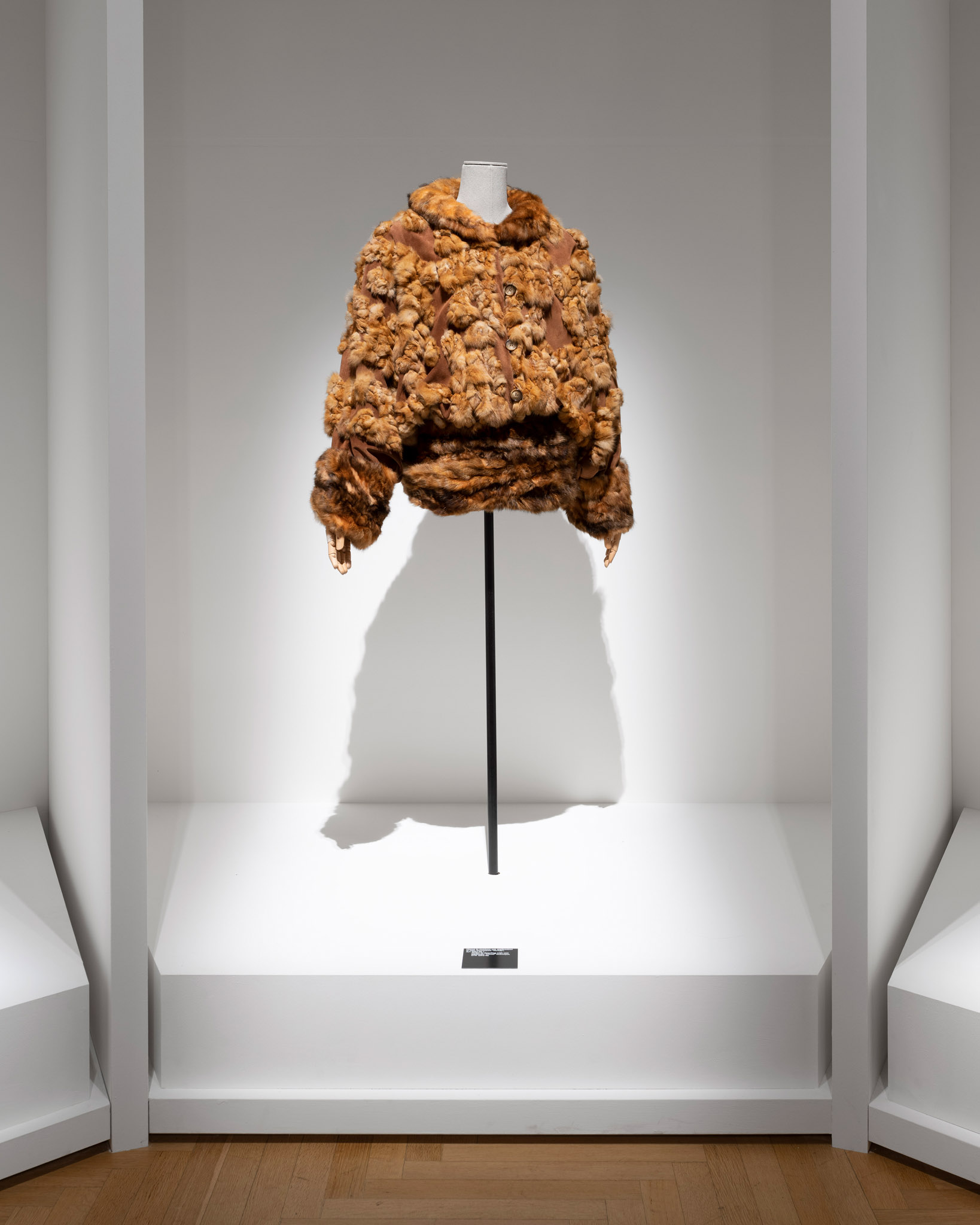
“Earth” collection, F/W 1984-85
Hip-length jacket in shearling with a raised rounded collar, hems, and intarsias in shades of brown vair. The jacket fastens with four buttons and is fitted at the hips with an integrated belt. The body and generous raglan sleeves feature the "Clouds” motif. As stated in the collection’s press release, Earth itself is the ultimate source of inspiration: “A thousand ideas arise from its rounded forms and its countless structures and surfaces. […] Reflected in a single material – fur – all the possibilities of the universe”
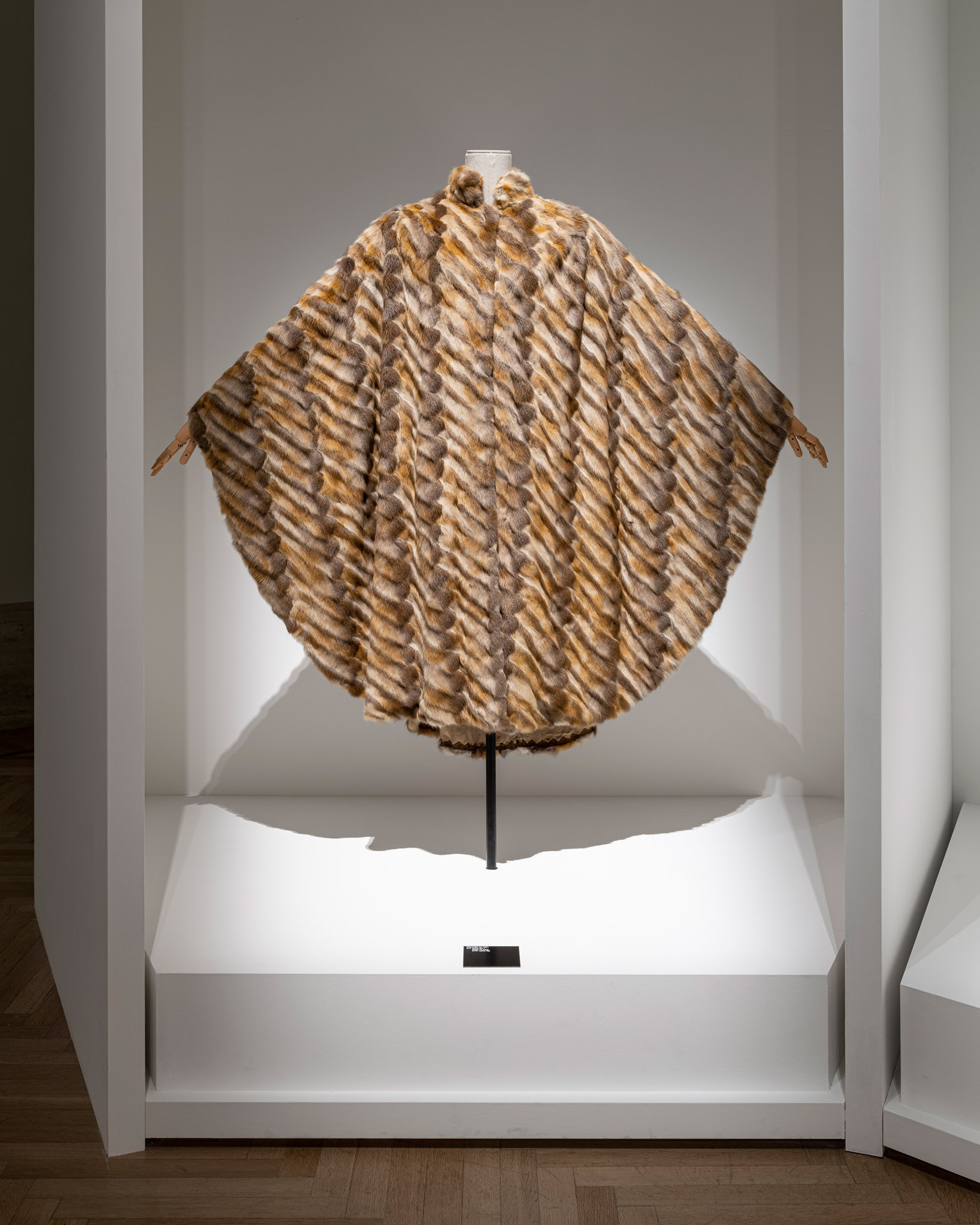
“The Macchiaioli” collection, F/W 1982-83
Voluminous vair cape in nuanced shades of brown. Reaching the knee, the garment fastens at the center with a row of concealed hooks extending from the raised collar to the hem. The natural markings of the fur are arranged to create a graphic chevron pattern across the rounded silhouette while its palette evokes the sunlit landscapes that frequently appear in the paintings of the Macchiaioli
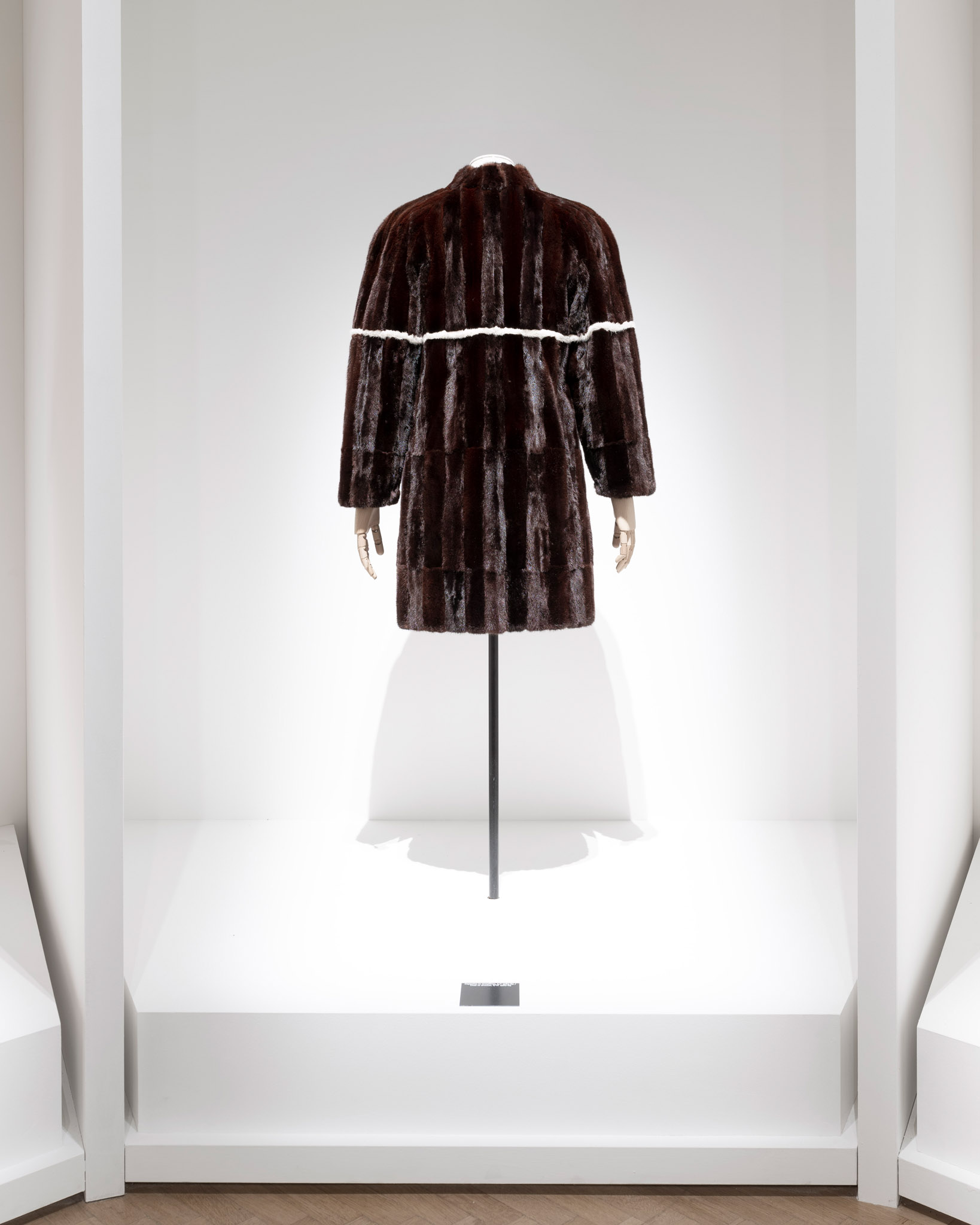
“The Macchiaioli” collection, F/W 1982-83
Knee-length coat in burnished ermine with a horizontal white band across the bodice. With generous sleeves and a raised collar, the garment is constructed by assembling rectangular sections of fur with alternating directions, creating a trompe l'œil effect of matte and lustrous stripes. The pattern is inspired by the brushwork of the Macchiaioli, the group of artists active primarily in Tuscany during the second half of the nineteenth century from which the collection takes its name